Why cats drink more from a fountain
Cats are drawn to running water: in the wild, a moving stream is safer than a still puddle. A pet water fountain keeps the water flowing continuously, so it stays fresh and oxygenated, and many cats that ignore a bowl start drinking more often. Better hydration matters most for cats on dry food, older cats and multi-pet homes where one bowl goes stale fast.
What we like about a stainless steel cat water fountain
Plastic fountains are cheaper, but plastic scratches, stains and holds onto slime and bacteria. A stainless steel cat water fountain wipes clean, takes hot water, goes in the dishwasher and doesn't give the water a plastic taste — which matters to cats who are fussy about what they drink. The DIANU bowl and top are 304 food-grade stainless steel, the same grade used for kitchen sinks and cookware.
Materials, part by part
- Bowl and top: 304 stainless steel, dishwasher safe.
- Pump, filter holder, spout parts: BPA-free plastic, washed by hand.
- Filter cartridge: activated carbon and ion exchange resin in a mesh case.
- Pre-filter: a foam filter sponge that catches hair and debris before the pump.
Flowing stream or gentle bubble
The fountain has two water flow modes. The stream suits cats who like to drink from a tap and lets two cats drink at once; the gentle bubble is calmer for shy, small or older cats who are startled by moving water. Many owners leave the stream on during the day and switch to the bubble at night.
Size and capacity
The bowl holds 3.2 litres (108 oz). For a 5 kg cat that is about twelve days of drinking water; two or three cats get through it in four or five days, and a small dog a little faster. Top it up before it reaches MIN — the water runs quieter when the level is high, and the fountain starts to gurgle when it is low.
The pump and how noisy it is
The 5 V pump is rated at or below 25 dB in operation, close to a whisper, and moves up to 180 litres an hour. Most of the sound you hear is water falling: lower the stream or switch to bubble mode, and keep the level high so the pump doesn't draw air. A pump that runs dry gets noisy first and then fails, so the MIN line is the one rule worth remembering.
Four-stage filtration
Water returns to the pump through a release strip, a cotton layer, an activated carbon filter and ion exchange resin, with the foam filter sponge in front of the pump. The carbon takes out odours, the resin softens the water, and the sponge keeps hair and food debris away from the rotor. Replace the cartridge and sponge every 1–2 weeks, depending on how many pets drink and how hard your water is.
Seeing the water level
A blue window on the side of the bowl, lit by an LED, shows the water level without lifting the lid. It is easy to check at night, and in homes with more than one cat it tells you when a top-up is due sooner than you expect.
Is it safe to leave running?
Yes. The fountain is designed to run 24 hours a day; the one thing to watch is the water level, because the pump must never run dry. The automatic part is the circulation itself — there is no timer, so the water keeps moving whether the cat is drinking or not.
Cleaning routine
Once a week, take the top off, remove the pump and brush the rotor with the cleaning brush, rinse the filter holder and wipe the bowl. The steel bowl and top can go in the dishwasher; keep the pump and plastic parts out of it. Cleaning frequently stops the slimy film that builds up in any pet water bowl.
Replacement parts
Official replacement filters come in boxes of 6, 9 or 12 sets — about three months of filters for one cat in the 6-pack. A replacement pump is rated for up to two years, and an accessories kit replaces the spout, the holders and the release strip if one goes missing.
Is it good for dogs?
It works for small dogs too; a dog drinks more and splashes more, so check the window more often and clean the bowl a little more frequently.

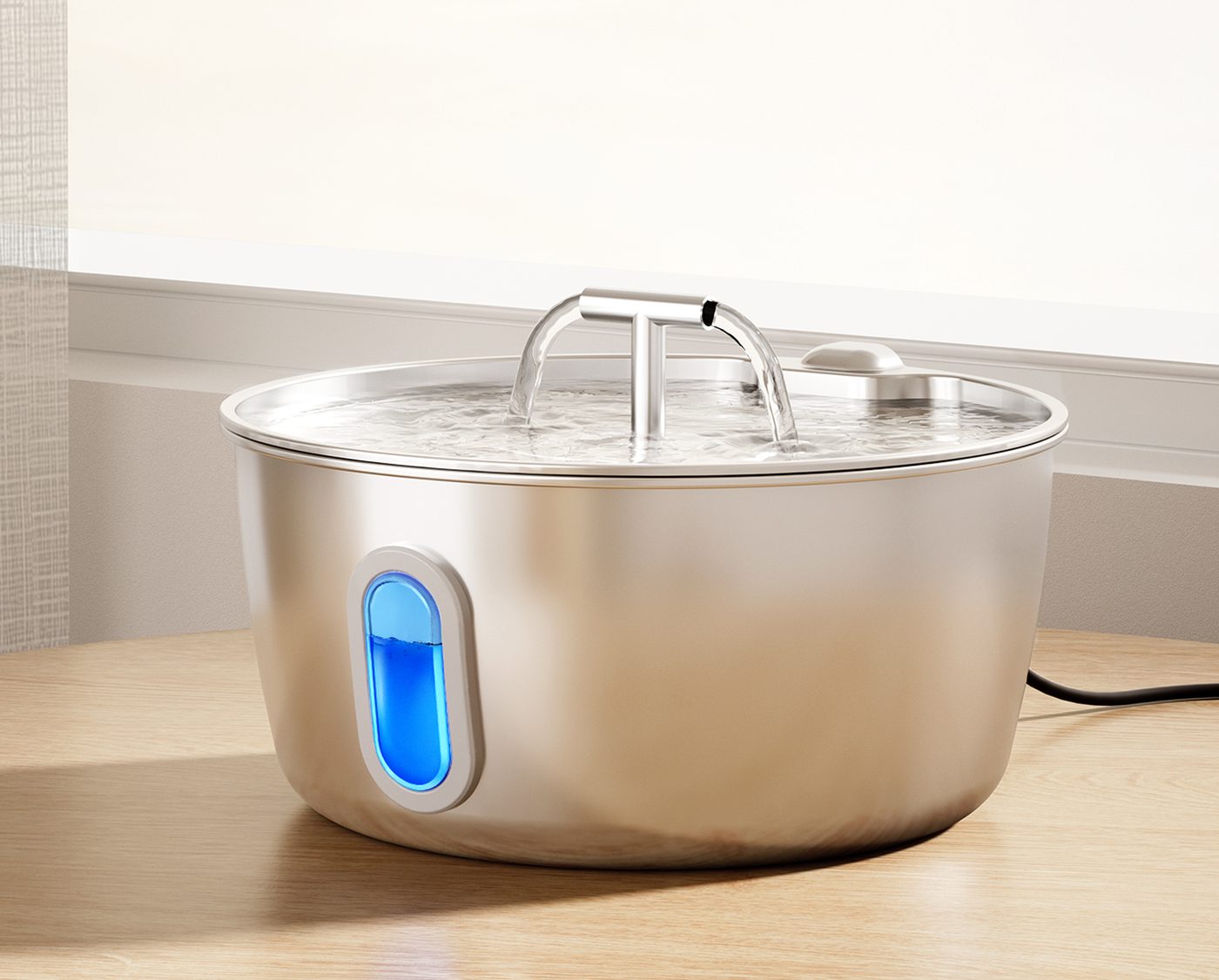
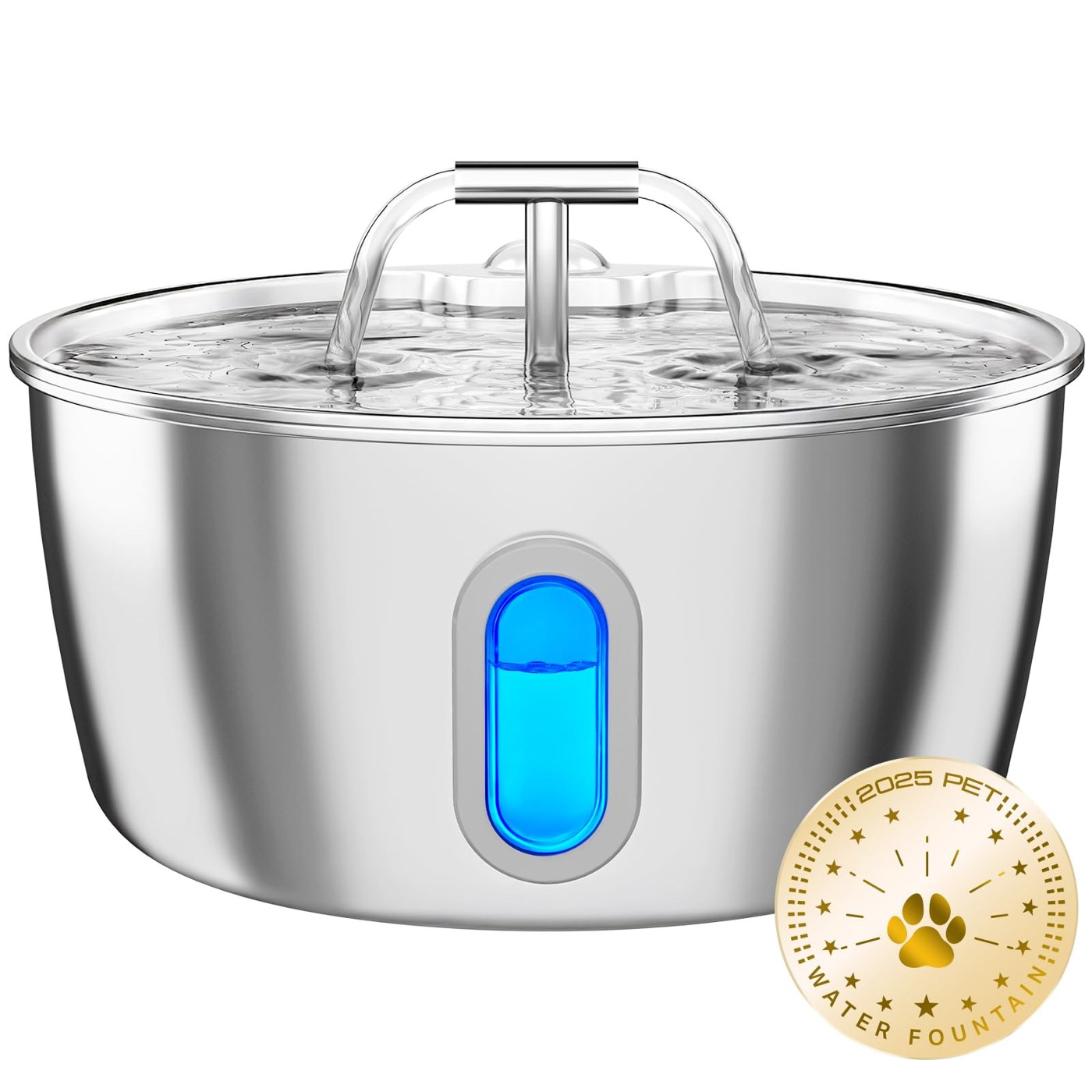 304 steel